
Every single day, thousands of gallons of water travel through your home. This water moves silently behind your walls, under your floors, and beneath your concrete foundation. Most of the time, the network of pipes does its job perfectly. You turn on a tap, clean water flows out, and the wastewater disappears down the drain. However, because this massive system is mostly out of sight, it is also completely out of mind. That is exactly what makes a hidden plumbing issue so dangerous. A tiny pinhole leak in a copper pipe or a small crack in a sewer line can slowly drip for months without making a single puddle on your floor.
By the time you finally see a visible sign of trouble, like a sagging ceiling or a moldy wall, the structural damage is already done. Wood rot, ruined insulation, and toxic mold growth can cost thousands of dollars to remediate. The key to protecting your home and your savings is early detection. You do not need to be a professional builder to find these secret problems. Instead, you just need to know what to look for, what to listen to, and how to read the subtle warning signs your house is giving you. This comprehensive guide will teach you how to become a plumbing detective in your own home, showing you how to hunt down hidden failures and decide exactly when to handle a fix yourself or call in professional support.
Listen for Clues: Finding Unseen Leaks Using Sound and Meters

Your water meter is one of the best tools you have for finding a hidden leak. This device sits inside a plastic or concrete box near the edge of your property or in your basement, and its only job is to track how much water enters your house. To run a simple leak test, start by turning off every single fixture in your home. Make sure the washing machine and dishwasher are not running, turn off all faucets, and tell everyone in the family not to flush the toilets. Once everything is completely quiet, walk out to your meter box and open the lid.
Many meters have a small, bright red or blue triangle called a flow indicator. If that triangle is spinning even slightly when all your water is turned off, you have an active leak. If your meter does not have a triangle, simply write down the exact digital number shown on the screen. Leave the water off and walk away for about one hour. When you return, look at the number again. If the number has increased, water is escaping from your pipes somewhere. If you find yourself in this situation, it is usually time to contact a leak detection service to find the exact origin of the trouble without tearing your walls apart.
Beyond using your eyes to read the meter, you can use your ears to scout for structural water issues. During the quietest hours of the night, walk through your house and listen closely to your walls. A pipe with a tiny crack under constant pressure will often make a distinct, low-pitched hissing or rushing sound. You might also hear a rhythmic dripping noise inside a wall cavity after someone uses a bathroom upstairs.
Another major financial clue will appear directly on your utility statement. If your family habits have not changed, but your monthly water bill suddenly spikes by twenty or thirty percent, you should not ignore it. Pipes do not fix themselves, and a small leak will only grow larger over time. Finding an experienced plumber early on can save you from a catastrophic pipe burst that floods your entire living room.
Inspect the Hidden Zones: Spotting Slow Drains and Cabinet Moisture
The cabinets under your kitchen and bathroom sinks are hot spots for hidden water damage. Because we use these spaces to store trash cans, cleaning supplies, and extra toilet paper, we rarely look at the actual pipes hidden in the back. At least once a month, you should completely empty these cabinets and perform a physical inspection. Look closely at the wooden floor of the cabinet. If you notice any warping, bubbling of the laminate, or dark discoloration, moisture is actively present.
To find a slow, micro-drip that is invisible to the eye, take a dry piece of white paper towel and wrap it tightly around the pipe joints. Run the sink faucet for two full minutes while holding the towel against the connections. If the paper towel comes away damp or discolored, you have a loose slip nut or a degrading rubber washer that needs immediate attention. If left alone, these small drips will rot the wooden vanity floor and create a perfect breeding ground for toxic black mold.
Moving down the system, the way your wastewater moves can tell you a lot about the health of your hidden drainage lines. A healthy drain should create a rapid swirl and empty a full sink basin in a matter of seconds. If you notice that water pools around your ankles during a shower, or if your kitchen sink takes several minutes to empty, you are dealing with an internal restriction. This sluggishness is often caused by a dense accumulation of hair, hardened cooking grease, and soap scum deep inside the drainage network.
When a simple plunger fails to clear the problem, professional kitchen drain cleaning becomes necessary to scour the interior walls of the pipe. Ignoring a slow drain will eventually lead to a complete backup, which can force dirty wastewater backward out of your low-lying plumbing fixtures. If you notice a foul, sewer-like odor coming from a sink that you use every day, that is another major red flag. The smell means organic matter is trapped in the line and rotting. Working with an experienced drain cleaning company is the safest way to clear these deep blockages before they cause a nasty sewage backup on your floors.
Trace the Foundations: Signs of Underground and Slab Plumbing Failures
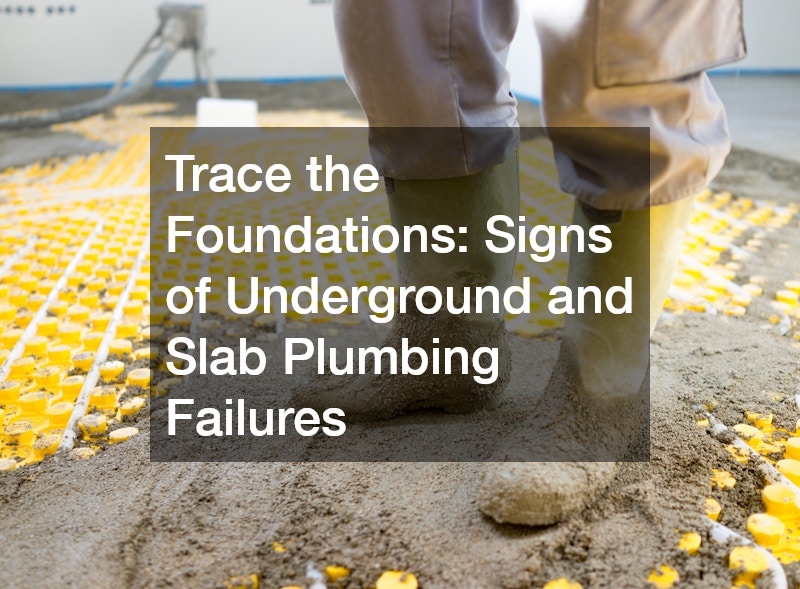
Some of the most difficult plumbing problems to find occur completely underneath your house. Many modern homes are built on a thick concrete foundation known as a slab. The main water supply lines and sewer pipes are laid in the dirt before this concrete is poured, meaning the pipes are trapped directly beneath your floors. When a pipe cracks under a concrete slab, it is called a slab leak. Because you cannot see the pipe, you have to look for secondary clues on your floorboards.
One of the most common signs of a slab leak is a localized warm spot on your floor. If you walk barefoot across your kitchen tile or bedroom laminate and suddenly feel a distinct zone that feels unusually warm, a hot water line may have cracked directly beneath that spot. Over time, this escaping water will pool under the concrete and begin to push upward through the porous stone, warping your wood floors or creating damp, musty spots on your carpets.
Outside the walls of your home, hidden plumbing issues will alter the appearance of your yard. You should regularly walk the perimeter of your property and look closely at the lawn. If you notice a specific patch of grass that is much brighter green and grows twice as fast as the rest of the yard, water is likely escaping underground. This happens when a subterranean water pipe breaks, constantly feeding the roots of the grass.
If the leaking pipe happens to be a buried sewer line, you will also notice a distinct, unpleasant odor in the area, and the soil may begin to sink, creating a dangerous mud hole. For deep underground failures, hiring a certified plumbing contractor is essential. They have the heavy equipment needed to excavate the earth safely. Getting help from local clogged drain services can quickly clear out tree roots that have broken into your underground pipes, restoring proper flow to your home.
Evaluate Pipe Material and Age: Knowing When Internal Systems Fail

The age of your home is a major factor in determining your risk for a hidden plumbing emergency. If your house was built before the year 1990, it likely contains plumbing materials that are nearing the end of their natural lifespan. To figure out what kinds of pipes you have, head down to your basement, crawlspace, or utility closet where the main lines are exposed.
Galvanized steel pipes, which were common in older homes, look like thick grey metal tubes. Over several decades, these pipes rust from the inside out. This internal rust acts like clogged arteries, restricting water flow and constantly weakening the metal structure until a hidden pipe wall finally gives way. Copper pipes are highly durable, but they can suffer from pinhole leaks caused by acidic water or high water velocity, which slowly eats away at the bends in the metal.
As you inspect your visible pipes, look closely for any signs of flaking, discoloration, or pitting along the metal surfaces. If you see a white, powdery crust or a greenish-blue discoloration around the soldered joints of copper pipes, this is a clear sign of active corrosion. This crust means a microscopic amount of water is already weeping through the joint and evaporating. It is only a matter of time before that weak spot opens up completely.
If you notice a sudden drop in water pressure across all the faucets in your house, it usually means the interior of your pipes is choked with rust or mineral scale. When an entire plumbing system reaches this state of decay, patching individual leaks is no longer a smart long-term strategy. At this stage, investing in a comprehensive repiping service is the best way to replace the old, failing lines with clean, modern, flexible piping. Consulting a local plumber will help you map out a replacement plan that fits your budget and permanently protects your property from future water damage.
Execute Safe Repairs and Call in Advanced Diagnostics

When you discover a hidden plumbing problem, you must quickly decide whether to try a do-it-yourself fix or call in a professional. Simple, accessible issues are perfect for a weekend DIY project. For example, if you find a slow drip under your bathroom vanity, the solution might be as simple as using a pair of slip-joint pliers to tighten a loose plastic nut on the sink trap. If a shut-off valve is weeping around the stem, you can often use a wrench to gently tighten the packing nut by a quarter turn to compress the rubber seal and stop the water.
Before starting any hands-on work, you must locate and test the main water shut-off valve to ensure it works properly in an emergency. When you begin working on old metal valves, always use two wrenches at the same time so you do not accidentally twist and crack the pipe hidden inside the wall. You must also be incredibly gentle with plastic or PVC drain nuts, as applying excessive force can easily strip the soft threads or crack the plastic components. Finally, you should stop working immediately and call for help if a pipe feels brittle or begins to flake under your tools, as this means the material is on the verge of a total collapse.
For problems that live deep inside your walls or underneath your floors, modern technology has changed the way we handle plumbing repairs today. In the past, finding a broken pipe required a worker to smash through large sections of drywall or jackhammer up a concrete floor based on a guess. Today, professionals use advanced tools to find the exact location of a break with zero destruction.
A prime example of this technology is a plumbing camera inspection, where a technician feeds a waterproof, high-definition camera attached to a long, flexible fiber-optic cable directly down your drain lines. The camera sends a live video feed back to a monitor, showing the exact location of tree root intrusions, collapsed pipe sections, or heavy grease buildups. Using these visual diagnostics allows a technician to create a precise repair plan, saving you time and money while keeping the structural demolition of your home to an absolute minimum.
Conclusion
Taking care of your home means keeping a close eye on the systems you cannot see. Hidden plumbing problems may start out small, but they can quickly grow into expensive structural emergencies if they are left ignored. By making it a habit to check your water meter, monitor the spaces under your cabinets, and watch for unexplained changes in your monthly utility bills, you can catch leaks long before they cause major structural damage.
Remember to respect the limits of your own DIY skills, and never hesitate to use professional diagnostic tools when a problem is buried deep beneath your floors or inside your walls. Take fifteen minutes this weekend to inspect the utility areas of your house and check your drains. Staying proactive is the single best way to keep your home safe, dry, and structurally sound for many years to come.